A material’s thermal mass is, fundamentally, its ability to absorb and store heat: a trait that we’re gradually learning to put to good use in building design.
Perhaps the easiest way to understand it is to think of electric night storage heaters. These radiators have been around since the 1970s, when large, heavy metallic units were mainly used to provide background heating in retrofits – where quick and cheap installation was paramount.
Underneath their metal casing was a large lump of masonry (concrete or dense blocks). The radiators were plugged into the mains and charged with heat overnight (when electricity is cheap). That warmth would then be slowly released throughout the day – ie. when the occupants needed it.
Today there are more sophisticated storage heaters, fitted with centrifugal fans and refractory storage blocks under the steel casing to maximise efficiency. But the core principle is the same: namely the collection and storage of heat in a dense material and its subsequent slow release.
This idea can be extrapolated and applied across the entirety of a building’s makeup – with the aim of using thermal mass to support a comfortable living environment.
Which materials have thermal mass?
The construction industry is now much more used to selecting products and systems based upon how thermally conductive or resistant they are. So there’s a range of complementary ways to balance structural strength and energy efficiency.
What’s less widely understood are the physical properties that promote thermal mass and how they can be put to best use. This comes down to a product’s density (how conductive it might be), its thermal capacity (how much of a heat source’s energy it can store within that density) and the thermal lag (the time in which it loses any stored heat).
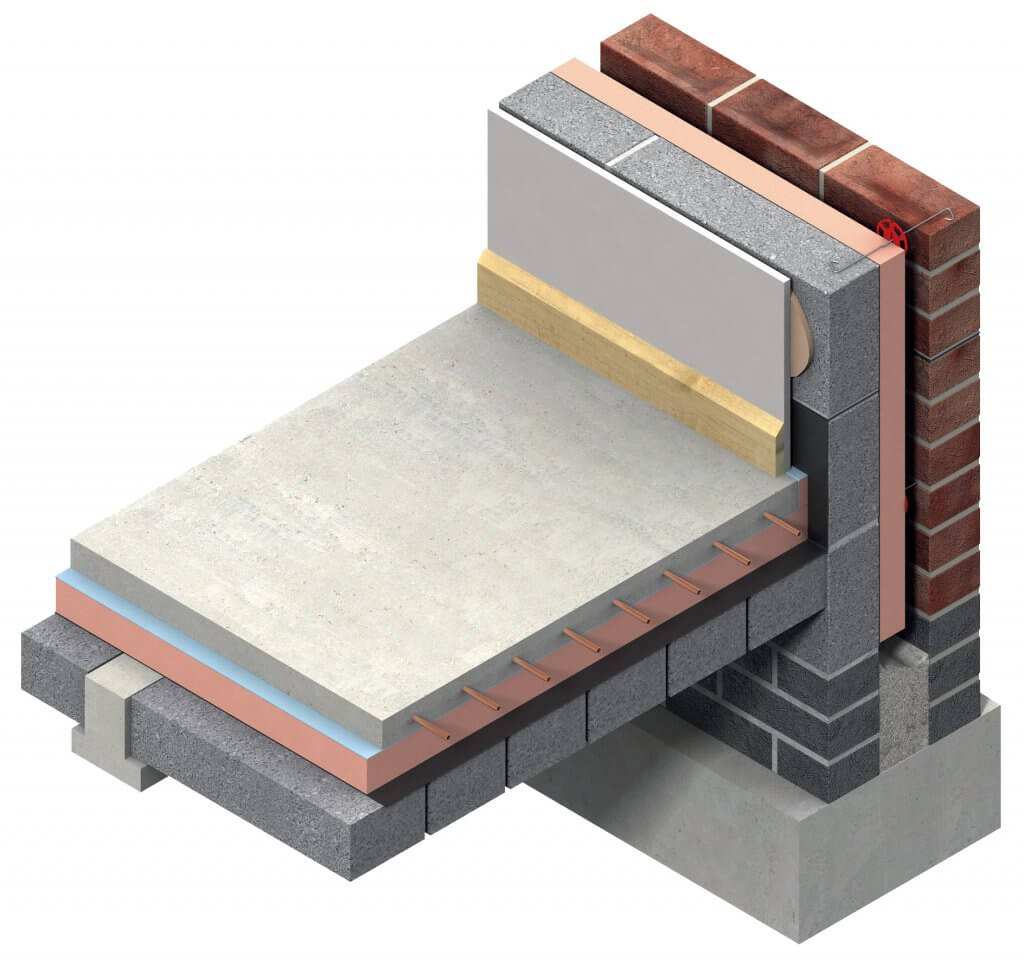
Whilst this beam and block floor is isolated by a layer of Kingspan insulation, to prevent the loss of heat from the UFH, the concrete screed above provides useful thermal mass – as does the internal leaf of the cavity wall
View more Kingspan Insulation products in the Build It Directory
For example, if a masonry house is bathed in sunlight, we would expect the glass in the windows – which has some density but little thermal lag – to quickly transfer heat. Conversely, the building’s external walls (which have significant density and a long thermal lag) would store up heat and release it slowly over many hours, after temperatures have cooled.
Products that are innately good performers when it comes to maximising the benefits of thermal mass are therefore those that are dense, have a high heat storage capacity and a slow thermal lag.
The post What is Thermal Mass? appeared first on Build It.
Article reference What is Thermal Mass?

No comments:
Post a Comment