We’re fitting warm water underfloor heating (UFH) in three key zones: the ground floor WC, and the bathroom and master ensuite upstairs.
We don’t necessarily need the extra output they’ll provide, because the heat pump ventilation system is technically a whole-house system. But underfloor heating is one of those must-haves for a new home, especially for taking the chill off underfoot after a shower or soak in the tub.
It’s the preferred choice for many self builders – and with good reason.
Its low flow temperatures marry up perfectly with renewables such as heat pumps. Standard boilers run more efficiently with UFH compared to using radiators. It’s also a hidden system, so it reduces the need for wall-hogging traditional emitters – although you may still want
to include a towel rail in wet zones to provide a timely boost when external temperatures drop into the minus figures.
UFH works by pumping a controlled flow of warm water through tubing embedded in the floor. This in turn warms the surface above, transforming it into a whole-room, low-temperature heating emitter. We’re using non-slip tiled finishes in the wet rooms of the Build It House, which are a great combination with UFH.
Specifying the systems
From the very early stages of our project, we were sure we wanted to partner with Nu-Heat for our UFH. The company offers an in-house design service, so you know you’re getting a system planned by the experts. Installation is usually by your plumber or a registered Nu-Heat installer, but in our case, Nu-Heat is working on a supply and fix basis.
To design the right system, the team needs to know the planned performance of the house and the rooms the UFH is going into, along with full details of the floor build-up, so they can identify the best fixings and calculate the required output. The system capacity is principally controlled by the pipe spacing and flow rate – the design will look to optimise both to give you the most efficient results.
Fitting Nu-Heat’s Fastflo UFH |
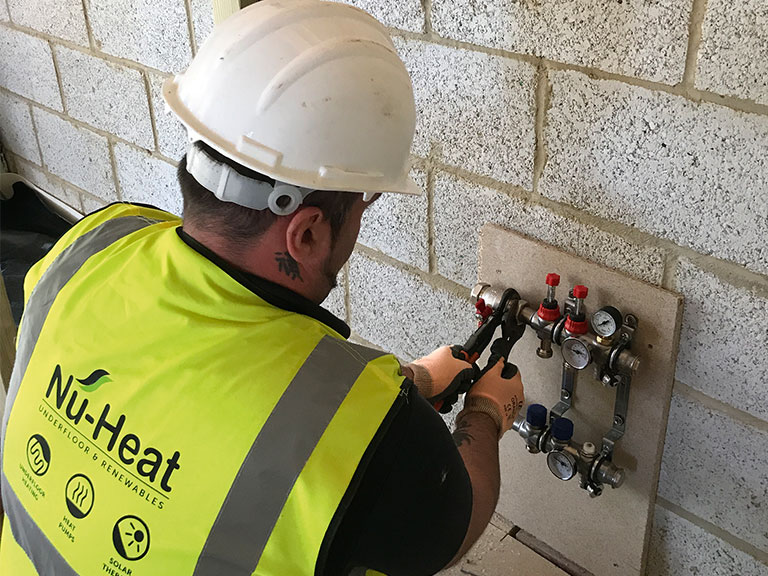
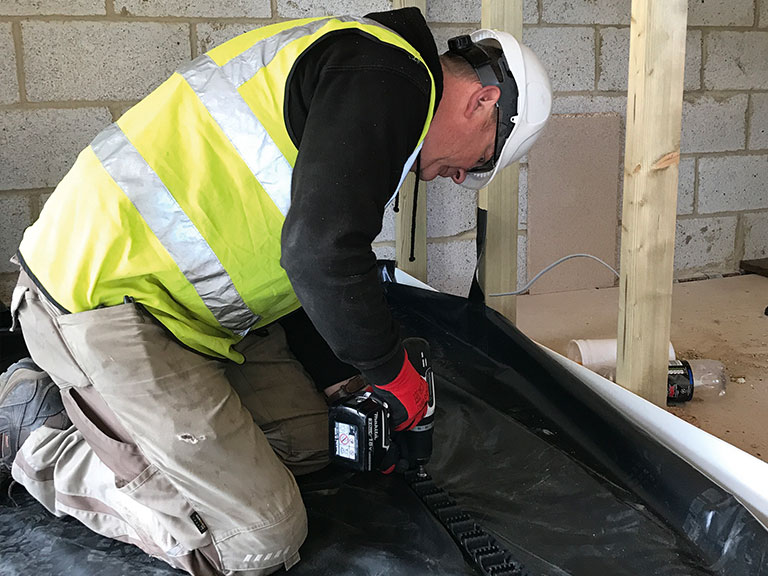 2. While he manifold goes in, the cliptrack is fixed into position. Note the polythene membrane, whcih will stop the screed escaping when it’s poured.
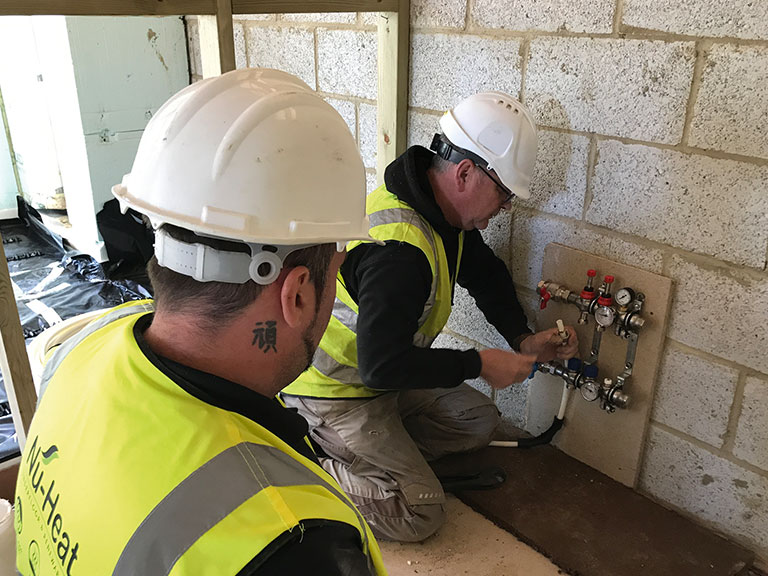 3. The feed for the ensuite is hooked up to the manifold before any pipework gets clipped into place.
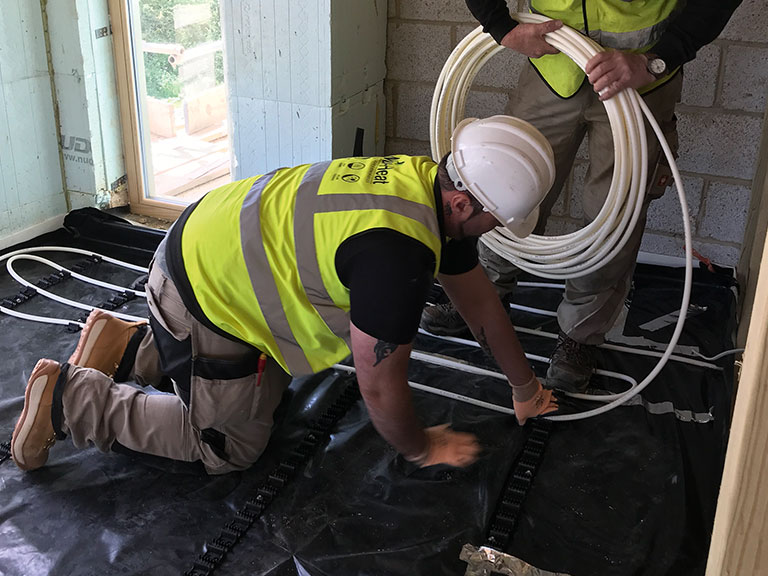 4. The team starts coiling out the 14mm high-density polyethylene Fastflo tube, which comes with a 10 year insurance-backed warranty.
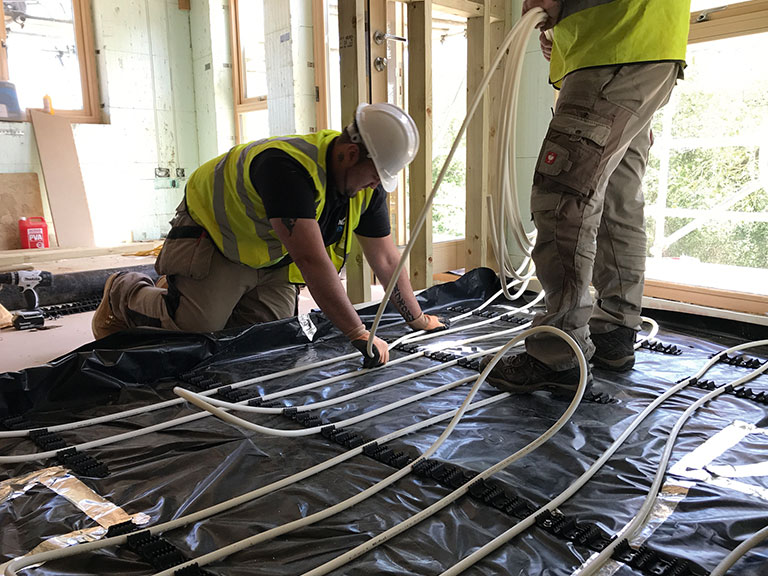 5. Experience allows the team to confidently get the arrangement right first time, with only minor adjustments needed.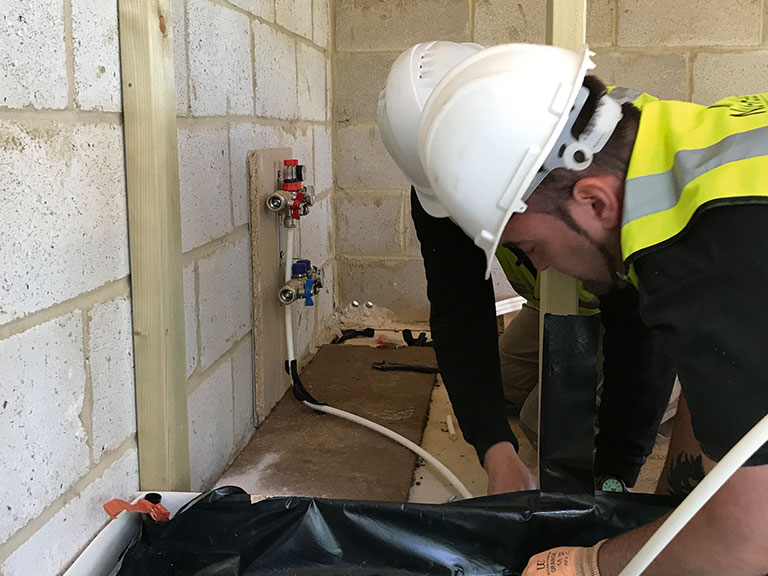
On a standard new home, we might have specified the same type of system for all three rooms. But we’re keen to demonstrate the different options self builders can consider, and Nu-Heat were happy to mix-and-match a little to help us do that.
In the WC we’re using LoPro 10, which is more commonly specified for renovations. It’s an ultra-slim solution with a total build-up of 15mm, so it can maximise head room on a new build with tight ceiling heights, too.
It’s made using pre-routed gypsum panels, which are simply glued and screwed directly onto the subfloor (in our case, a layer of rigid insulation above a beam and block floor). It can be tiled straight over, but we’ll fit a decoupling membrane beforehand to reduce the risk of the tiles cracking.
On the first floor, we have metal-web timber posijoists; so you might think the same solution would work. But we’re also installing a specialist acoustic floor system from Screedflo, to see how it performs compared to beam and block.
The post Underfloor Heating Installation appeared first on Build It.
Article reference Underfloor Heating Installation

No comments:
Post a Comment