Early in the planning stages of the Build It House, we considered creating what you might call a half-smart home.
The idea was to install hi-tech smart home electrics in the plant room and across the ground floor, but switch to conventional electrics above. That way, we could easily demonstrate the lifestyle and control differences you can achieve with a smart home.
But within minutes of sitting down for an initial meeting with Andy Moss from Moss Technical (the UK’s Niko distributor) back in early 2019, that plan was out of the window.
Never mind the now-obvious point that installing two different systems would cost much more than using a single solution (of either type). It simply didn’t make sense for us to go down the traditional wiring route for an Education House.
There’s one phrase Andy came up with in that meeting that’s stuck with me ever since: “sooner rather than later, smart home wiring will be the new normal.”
Benefits of a smart home
When you think about it, we’re already 9/10ths of the way there.
Our daily lives are intertwined apps designed to make things easier, whether checking the fastest route to work in the morning, managing our banking, or switching the heating on remotely when we’re nearly home. And who knows what’s next?
So it’s got to be worthwhile to future-proof your project with smart home electrics now. By getting the infrastructure right, you know it will still meet your needs 10 or 20 years down the line.
We’re keen to demonstrate that a smart home doesn’t have to be one with £10,000s worth of colour-change lighting and the best mini cinema on the street. It can be much more modest and, you could argue, more useful.
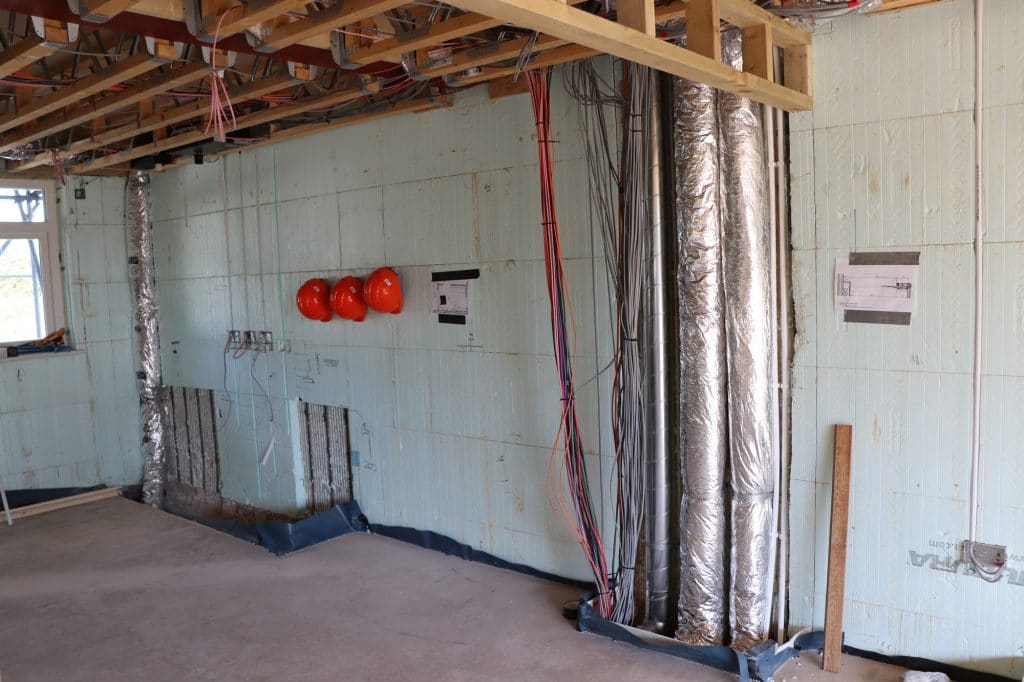
There’s a giant wad of cabling running from the plant room through the main services duct; we’ve worked hard to keep this area as tight as possible
The right setup can allow you to ditch the four-way switch bank in your open-plan kitchen diner for a single touchscreen that works alongside layered lighting, for instance.
Or maybe hitting the ‘all off’ button when you leave the house not only switches lighting off (and onto security mode) but turns down the heating, too. It could even shut the electric Velux in the vaulted ceiling that you can never convince yourself you definitely closed.
In other words, a smart home can complement and enhance your lifestyle and, perhaps most importantly, can adapt as technology advances and your family’s needs change. And should you want to add the bells and whistles, if you’ve laid the groundwork by getting the infrastructure right – you can!
Refining the electrical plan
We worked out an initial electrical design plan with our architects Lapd, looking roughly at where we’d need sockets, switches and lighting. But this is just a starting point – it needs to be fleshed out to ensure you’re getting what you need. This is also crucial if you want your electrician to give you a realistic budget.
Pulling this together involves dealing with a range of stakeholders, as every bit of equipment going into the house will need the right cabling in the right place. Whether it’s the heat source, layered lighting to suit different tasks and moods in the kitchen-diner, or a fused spur for an underfloor heating manifold, there’s plenty to consider.
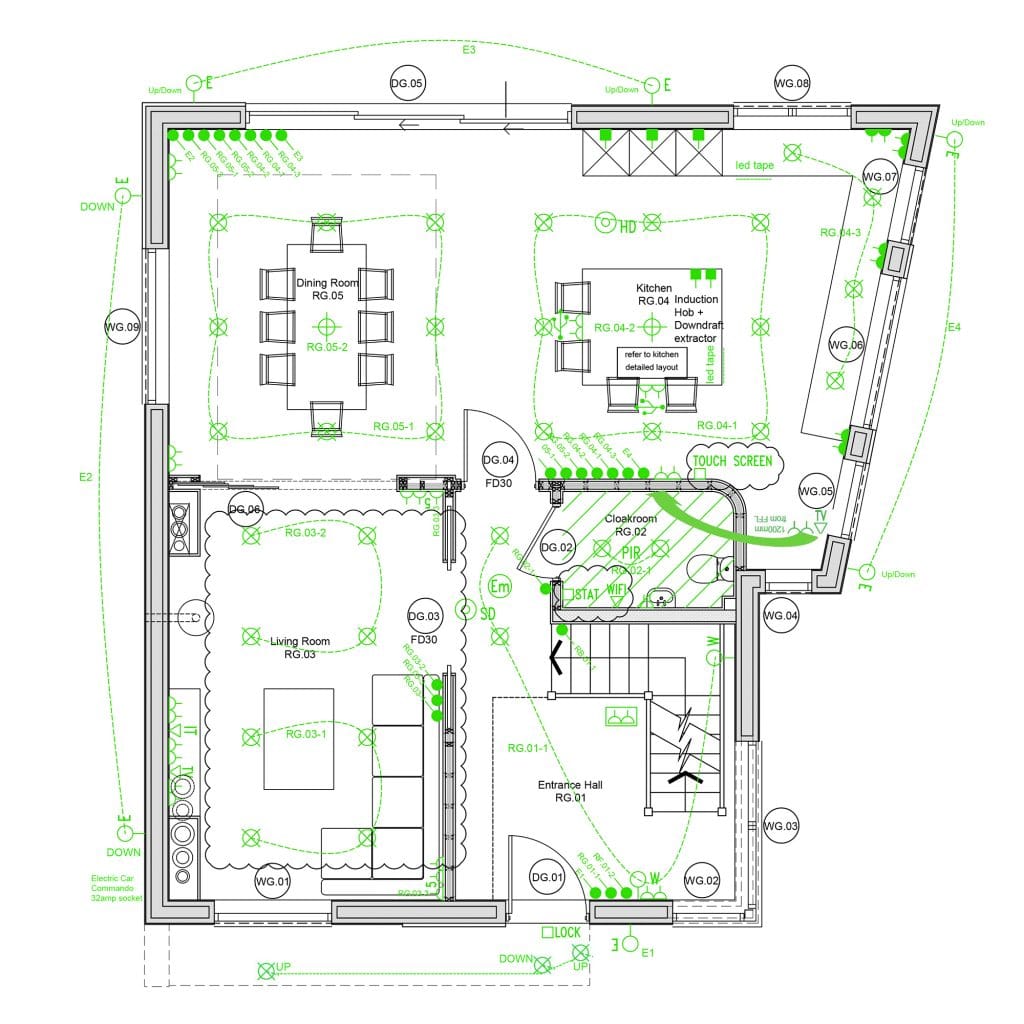
Electrical plans can seem confusing at first glance. For instance, the solid green dots on this ground floor plan are actually all part of a single control
For instance, we don’t have many wall-mounted cabinets in the kitchen at the Build It Education House, so will need spot lights above the worktops.
Think about practicalities, too. What sockets and switches would you ideally like either side of a double bed, for instance, and are you going to watch TV here? And what height should controls be at to keep them away from young kids?
Do some sockets need to be fitted into floors rather than the walls? We’ve done this in the vaulted hallway, to power hoovers and the giant Christmas tree this space clearly needs!
The post First Fix Smart Home Electrics at the Build It Education House appeared first on Build It.
Article reference First Fix Smart Home Electrics at the Build It Education House

No comments:
Post a Comment